
Listen to this radio interview
Recorded January 2026, on Johnson County Now
Host • 00:00
It is time for Johnson County now. What’s happening in Johnson County? Well, we’re gonna start with Alexa. She is new to assist. Alexa, tell us a little bit about yourself.
Alexa • 00:08
Sure, so I just started with assist this past summer. So it was definitely new to the organization, but definitely not new to victim services. I come from a law enforcement background, so I’m very familiar with the process that it takes to get a justice for a victim, and then as well as all the other parts that people don’t realize have to happen to make sure that they are supported and cared for throughout the whole process. So that’s really what we do.
Host • 00:28
That’s kind of nice. You can help a victim from both sides now.
Alexa • 00:32
Yes.
Host • 00:32
And that’s a lot better than a lot of people. So that’s a wonderful thing. So what is going on with the cyst then?
Alexa • 00:37
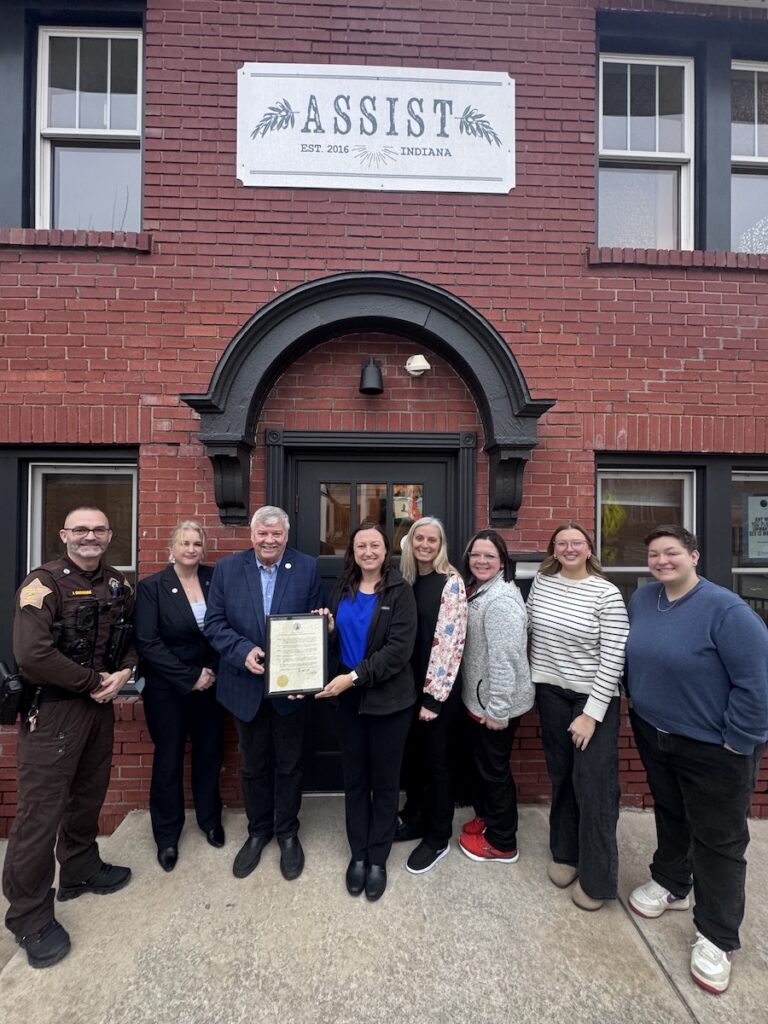
As of January 1st, it is human trafficking awareness month. So that’s just something that we want to make sure that people are aware of. That’s not something that a lot of people know. So just, we care about human trafficking all year long, but this is really the month that we push, push, push, and just reach out to the public, provide education where we can. Franklin Mayer proclaimed it human trafficking month. So we thank him for that, just to make sure that everybody’s involved, you know, from the city up that they are making sure that the public is aware. And then just real quick, just to talk about what assist does for those that don’t know, assist is a sexual assault response center. So we provide victim services for juveniles and for adults. We have a children’s advocacy center. We have the ability to do medical exams. We do protection orders. If somebody needs assist assistance with that, the word assist is literally what we do, we assist victims. So if somebody needs anything on the basis of being a victim of a crime, or they just need someone to talk to, or they just need resources, then they can come to us for that.
Host • 01:32
And you also have some training coming up.
Alexa • 01:34
We do. So January 23rd, we’re doing a training event being put on by assist. This is the first time we’ve ever done something like this pertaining to human trafficking. It’s all virtual, which is great. Cause anybody can tune in from anywhere to do it. So just want to talk about real quick, the organizations that are going to be participating in that. So we first are starting off with truckers against trafficking, which is just an outstanding organization for those that don’t know. They specifically work with truck drivers. It’s exactly what the name says, Truckers Against Trafficking. So they realized that there was a need for focused intervention at truck stops. Unfortunately a lot of trafficking occurs at truck stops. So they’ve provided training to the drivers to know what to look for if they witness that it’s happening and then what to do about it if it is something that they notice happening. So they’re a great organization. They’re gonna be talking about what they do and then what the way that they get involved with human trafficking outreach. The next organization that’s gonna be speaking is called the Set Me Free Project. So their bread and butter is really education. They can provide education to just about anybody that requested and it’s all free. So that’s a great resource. If there’s a workplace that is interested in some training, reach out to Set Me Free Project, they’ll get with you, they’ll set it up for you. They can do it virtually, just like they’re appearing with us. So they’re gonna come and just talk about what they offer, the things that they can do, the education that they can provide. Finally, ASSIST will be rounding out the training day. So we’ll be teaching human trafficking 101. So it’s exactly like it sounds, it’s just the basics of the science to look or what to do if you see it happening, how you can get involved from even if it’s just making a phone call to your local police department or to supporting somebody that may be being trafficked and what you can do to help them. So that will be just like very good education. And then I just wanted to put out there that assist will provide this education to anyone that requests it for free. So I highly suggest, you know, if your workplace is interested to reach out to us at assist and we can set you up with that training.
Host • 03:19
Well, and you know the one thing that I learned ’cause I’ve gone through some of these trainings before is that people think human trafficking comes from people out of town. And the scary part is your neighbor, it’s an uncle. – Absolutely. – It’s somebody closer to you and the family than you think.
Alexa • 03:32
Yes, most people are trafficked by somebody they already know. – Right. – It’s not always a stranger in a parking lot pulling you into a van. Does that happen? Absolutely, but the larger percentage is coming from, like you said, family, friends, somebody they might meet on social media that they think they can trust.
Host • 03:45
So again, if people do want to find out they need help, where do they go?
Alexa • 03:49
So they can reach out to us. Education is really the best way that anybody can get involved. It’s just making sure that you know what to look for. Some things that I would say is if you have somebody coming into your workplace that does not have possession of their personal documents, they don’t have easy access to their driver’s license, their passport, their social security card, somebody’s holding those things for them, that would be a red flag. Doesn’t necessarily mean that they’re being trafficked, could be domestic violence, it could be something else, definitely something that you might want to think this is off. Something else could be that they have to ask permission to take care of themselves, to take a shower, to eat. Somebody is running those functions of their life that they are not in control of. Maybe they’re living in a home with ten other people and they are all being taken in a van to their workplace and back because their employer is the one that’s housing them. Something else that would obviously be be off. Definitely one I would say is really important is if you have somebody into like a medical center. That’s where I noticed that a lot of the education we’re providing is going out to like hospitals and urgent care centers and mental health care centers because oftentimes that might be the only time this person is allowed to interact with somebody outside of their circle because they do need medical care and you know that’s just something that’s a necessity in their life. So this might be the only opportunity that they have to you know reach out to somebody else that could help them.
Host • 05:08
Okay. And the website if you want to find out more about ASSIST?
Alexa • 05:12
assistindiana.org and then I can provide my email as well. That’s [email protected]. If you have any questions, want to set up training or just maybe think that you are somebody that is involved in trafficking. A lot of times people don’t even realize what that’s what they’re part of. So if they, if they’re questioning it, they can reach out to us as well. They can peruse our website that was actually going to be brand new, brand new websites. So they’ll have great resources on there to look for.
Host • 05:35
Well folks, there you go. You’ve met Alexa. She works for assist. So if you do need help, assist. That’s there.
Alexa • 05:41
That’s their name, that’s what they’re there for. Yes, well thank you so much for having me on. And like I said, I’m just so happy to be on here to share this information and that if it reaches the right people, that’s all I’m looking for.
Host • 05:52
Well, we appreciate you coming on today. It is Johnson County now right here on Corn Country, 100.3.

Online, via Zoom

Jan 23 from 9am to 3:30pm EST
Human trafficking is an issue that often goes unnoticed, even though it happens in communities all around us, including here in Johnson County.
Education is one of the most effective ways to recognize the signs, prevent exploitation, and support those who may be affected.
That’s why the Human Trafficking Education Series, presented by ASSIST Indiana, is an important opportunity for anyone wanting to learn more.
This is a fully online event. A Zoom link will be shared after registration.
Agenda
- 9-10am: Truckers against trafficking
- 10:30am-12:30pm: Set Me Free Project
- 12:30-2pm: Lunch (on your own)
- 2-3:00pm: Human Trafficking 101
You can come and go throughout the day as your schedule allows.
What the Education Series Covers:
This training series focuses on helping participants better understand what human trafficking really looks like. Topics include:
- What human trafficking is and common misconceptions about it
- How traffickers target and control victims
- Warning signs that may indicate trafficking situations
- Practical ways individuals and communities can help prevent trafficking
- What to do if you suspect someone may be experiencing exploitation
The information shared is useful for both professionals and community members.
Who Should Attend?
This online series is helpful for a wide range of people, including:
- Educators and school staff
- Healthcare and social service professionals
- Volunteers and nonprofit workers
- Employers and workplace leaders
- Parents, caregivers, and concerned community members
No prior experience or background knowledge is required.
How to Register
Registration is available via Eventbrite.
Register for the Human Trafficking Education event