
Human trafficking isn’t well understood. Further, Indiana’s location as the Crossroads of America makes it critical we all understand the signs of trafficking, the human and fiscal costs, and the consequences of inaction.
ASSIST provides free human trafficking prevention training to any group, employer, or organization ready to end this terrible practice.
Human trafficking stats underreport human trafficking in Indiana and elsewhere
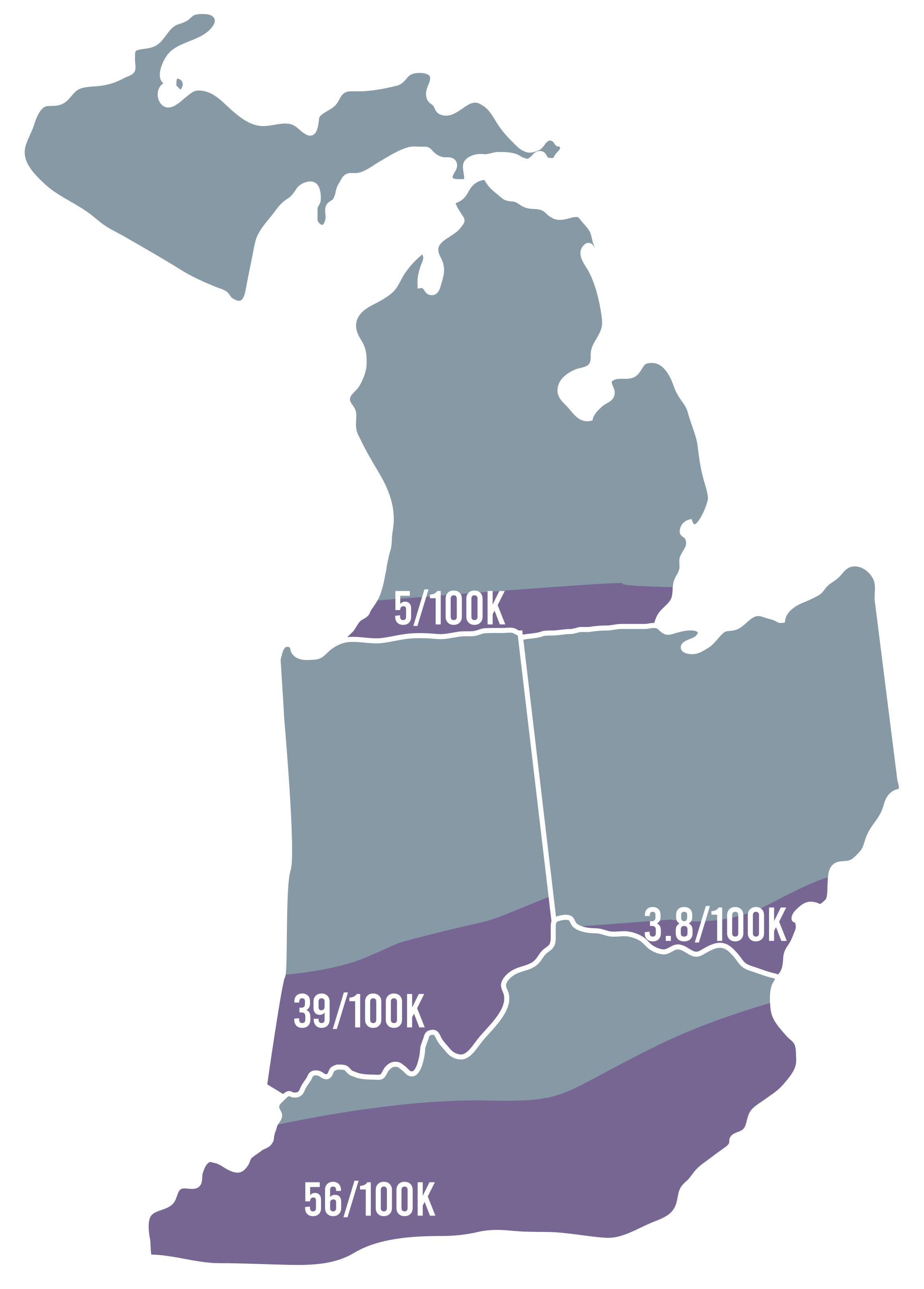
Human trafficking statistics are all over the map — literally.
The National Human Trafficking Hotline is the best source in Indiana, and shows a rate of 39 victims for every 100k people. That’s below the national average of 60-per-100k. Michigan’s is 5/100k. Ohio is 3.8/100k. Kentucky is at 56/100k.
The differences are due to reporting mismatches and underreporting. The truth is, we don’t know the full scope of human trafficking in much of the country. In Indiana, when law enforcement discovers a child is being trafficked, for instance, that case is assigned a “primary” case type. Because human trafficking often results in sexual assault and abuse, the case is filed as “child molestation” or “battery” or some other “worse” crime.
This underreporting makes it hard to know what’s really happening. But law enforcement, prosecutors, judges, and advocates like those at ASSIST can tell you: human trafficking is a far worse problem than most anyone realizes.
Human trafficking intervention saves lives, right here around Johnson County
Our proximity to Indianapolis puts us at a crossroads between Louisville and very close to trafficking routes along highways to St. Louis, Cincinnati, Chicago, and north to Fort Wayne and Detroit.
ASSIST’s Human Trafficking Prevention and Intervention trainings help participants:
- Identify physical and behavioral cues, such as overly submissive behavior
- Notice situational cues and improve awareness, such as people constantly being escorted in public
- Social cues, such as a reluctance to speak about some topics or controlled use of a phone
- And more, like being under pressure to repay large debts to an “employer” or “broker” or having large amounts of cash despite no clear source of income.
Human Trafficking can take two broad forms:
- Sex trafficking, where someone is coerced into sexual acts.
- Labor trafficking, where a person is forced or coerced into working or performing some act.
Human trafficking victims rarely know they’re being trafficked until it’s too late
Schedule a free, no-risk consultation
Discuss a Human Trafficking Intervention training for your team
Schedule time with ASSIST for a consult.
These brief, online sessions are here to answer questions and discuss options for future training.
Or email [email protected] with questions.
Human trafficking is a complex problem
Human trafficking does not look like the Hollywood image of a white van in the parking lot as they take a girl away. That can happen, but the bigger issue is how trafficking starts online. People don’t even know it’s happening to them.
People who are trafficked often don’t know they’re a victim. They build a relationship, perhaps with a boyfriend, a drug dealer, or even a spouse. While most victims are women, young boys and men are trafficked at surprisingly high rates.
Who benefits from Human Trafficking Prevention and Intervention training
ASSIST provides on-site or virtual training for:
- First responders
- Healthcare providers and facilities
- Schools and universities, for students and faculty
- Employers of any size or industry
- Other nonprofit organizations
- Churches and ministry groups
- Youth groups with age-appropriate education
We’re here to ASSIST human trafficking victims
More human trafficking training and resources in Indiana
ASSIST works alongside other Indiana organizations that are also fighting human trafficking. If your group needs a specialized topic, serves young survivors, or wants to connect with a regional anti-trafficking network, these organizations can help.
Indiana Trafficking Victims Assistance Program (ITVAP)
The Indiana Youth Services Association’s ITVAP serves trafficking survivors age 24 and under and offers free trainings statewide. Topics include human trafficking awareness, trauma-informed care, trauma bonding, online exploitation, labor trafficking, and the intersection of trafficking and substance use, with sessions tailored for community groups, law enforcement, educators, healthcare providers, and clinicians.
Anti-Trafficking Network of Northeast Indiana
This regional coalition brings people and organizations together through network meetings, community education, and updates on local initiatives, so communities in northeast Indiana can work together to recognize and respond to human trafficking.
FAQs about human trafficking education
No, ASSIST provides human trafficking education and the materials at no-cost.
Most sessions last about an hour, but with questions can take longer.
High school age or higher are recommended. Most K-12 schools looking for training are usually better served by our Child Abuse Prevention Education sessions, also offered for free. Faculty, however, can benefit from both.
Yes, virtual options are possible. This works well for employers with remote employees or groups hosting “lunch and learn” style sessions.
